1750°C Glass Furnace Lining Refractory Selection Guide: Fused Cast Alumina Corundum Blocks

Rongsheng Refractory
2026-03-17
Tutorial Guide
This guide provides a practical, engineering-focused framework for selecting and maintaining refractories for high-temperature glass furnace linings up to 1750°C, with a focus on Rongsheng Refractory’s high-purity fused cast alumina corundum blocks. It explains the key performance indicators that determine lining stability—maximum service temperature, flexural strength, thermal conductivity, and thermal shock resistance—and clarifies how crystal structure and low-impurity formulations improve resistance to alkali attack and extend service life. The article also covers common furnace-lining failure modes, on-site diagnosis, alkali-corrosion prevention, repair and replacement criteria, and maintenance steps that reduce unplanned downtime. In addition, it outlines the advantages of an intelligent production line, quality control, packaging, lead time, and customization options, helping plant maintenance teams and engineering managers standardize material selection and secure long-term, reliable operation. Readers are encouraged to schedule technical consultation and request customized lining solutions based on furnace design and operating conditions.
https://shmuker.oss-accelerate.aliyuncs.com/data/oss/common/20250605161211/20250605/8176351c0073269d7bfa506f4332ca6b/Abee37ac3e8e04c3881b5d22039681a36k.jpg

Selecting Refractories for High-Temperature Glass Furnaces (Up to 1750°C): A Practical Guide to Fused Cast Alumina-Corundum Blocks

In high-temperature glass melting, refractory selection is rarely “one-and-done.” For maintenance teams and engineering managers, the real question is how to build a lining system that stays dimensionally stable, resists alkali attack, and keeps heat losses predictable—especially when peak hot-face conditions can reach 1750°C.

This guide focuses on Rongsheng Refractory fused cast high-purity alumina-corundum blocks commonly used in glass furnace lining zones that demand strong chemical resistance and structural reliability. The aim is simple: help decision-makers match material properties to actual operating risks, then maintain performance through targeted inspection and replacement practices.

1) Start With the Operating Reality: What “1750°C Service” Really Implies

A “1750°C” requirement is rarely just about melting point. At these temperatures, the furnace lining is typically challenged by a combination of alkali vapor penetration, glass contact corrosion, thermal gradients, and mechanical stress from settlement or joint movement. That means selection should prioritize:

Chemical durability

Resistance to alkali-rich vapors (Na/K) and glass-phase infiltration that can accelerate spalling and structural weakening.

Thermo-mechanical stability

Adequate hot strength and thermal shock tolerance to survive temperature cycling, burner tuning, and local hot spots.

In many glass-melting layouts, fused cast alumina-corundum is selected where a dense, low-porosity body and stable crystalline phases help reduce penetration pathways—making it particularly relevant when alkali attack and glass contact dominate failure modes.

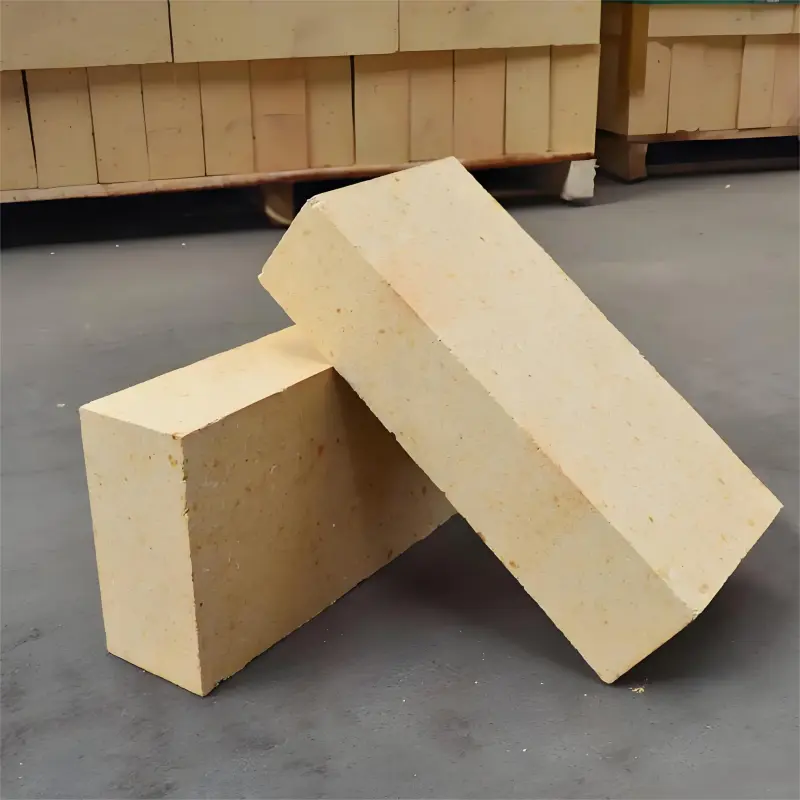
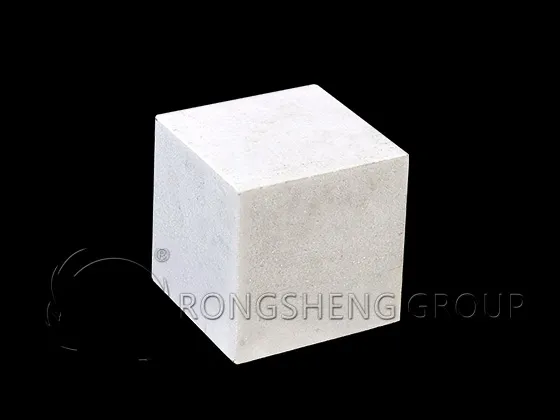
Dense fused cast alumina-corundum blocks prepared for high-temperature glass furnace lining applications

2) Key Performance Indicators (KPIs) for Fused Cast Alumina-Corundum in Glass Furnaces

Maintenance and procurement teams often receive datasheets filled with numbers. The best practice is to map each KPI to a failure risk. Below is a practical, application-first interpretation of the indicators typically used when evaluating fused cast alumina-corundum blocks for high-temperature glass furnaces.

Quick Reference Table: Property → What It Protects You From

KPI Typical reference range (industry) How it impacts furnace reliability
Maximum service temperature Up to 1750°C (application-dependent) Reduces risk of hot-face deformation and phase instability under peak conditions.
Flexural strength ~25–45 MPa at room temperature (varies by grade) Helps resist cracking at edges, corners, and joint regions during mechanical loading and thermal cycling.
Thermal conductivity ~2.0–3.5 W/m·K (hot-face dependent) Influences shell temperature and energy loss; also affects thermal gradients that can drive spalling.
Thermal shock resistance Often specified by cycling tests and microstructure Determines survival during burner adjustments, batch changes, and unplanned temperature fluctuations.

Note: Values are provided as practical industry references; final selection should align with zone conditions, glass composition, atmosphere, and installation design.

A strong datasheet is not a guarantee of long service life. In glass furnaces, alkali exposure path + temperature gradient + joint design usually determines whether a lining lasts months or years.

3) Why Crystal Structure and Low-Impurity Formulation Matter in Alkali-Rich Environments

Fused cast alumina-corundum is valued in part because a dense body and stable crystal phases can reduce pathways for molten glass and alkali vapors to penetrate. In practice, impurity control becomes a corrosion-management tool: fewer reactive components generally means fewer weak interfaces for chemical attack to exploit.

Microstructure advantage

Dense fused-cast structures typically show lower connected porosity than many fired refractories, helping limit alkali and glass-phase transport into the block body.

Purity as a longevity lever

High-purity alumina-corundum formulations are generally designed to reduce secondary phases that may soften or react under high-temperature glass furnace chemistries.

For technical managers comparing options, it’s worth requesting not only the usual strength and density data, but also evidence of batch consistency and process repeatability—because in long campaigns, variation between lots can become a hidden risk to lining uniformity.

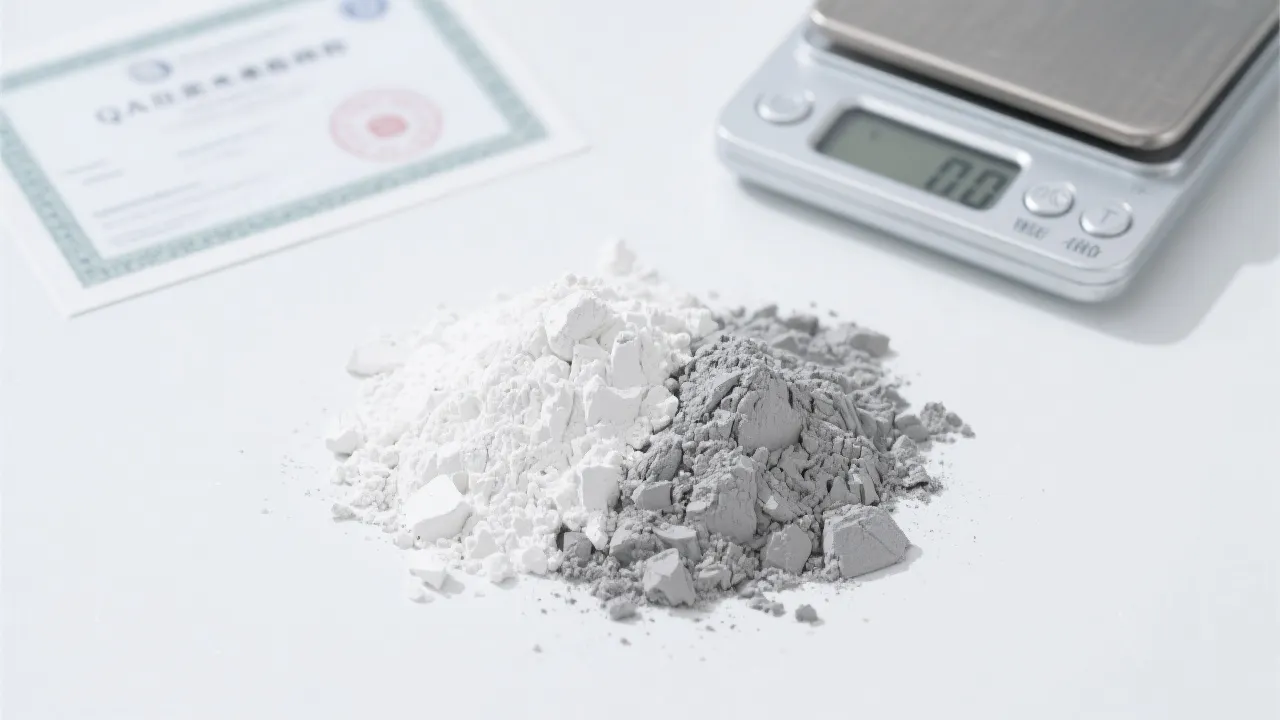
Quality control and dimensional inspection workflow for fused cast alumina-corundum refractory blocks used in glass furnaces

4) Field Diagnostics: Common Lining Problems and What They Usually Mean

When failures happen, symptoms often look similar—but root causes differ. A structured diagnosis can prevent repeated shutdowns and unnecessary brick replacement. Below is a practical “symptom-to-cause” guide used by many furnace maintenance teams.

Troubleshooting Matrix (On-Site Use)

Observed symptom Likely drivers Recommended next action
Localized spalling near joints Thermal gradients, joint gaps, alkali ingress at interfaces Check joint design & mortar compatibility; inspect hot spots; improve sealing strategy.
Surface glazing / sticky deposits Alkali condensation, batch carryover, vapor transport Review burner tuning and vapor flow; add targeted protective measures in exposed zones.
Progressive thinning in glass-contact areas Chemical dissolution, infiltration-driven corrosion Confirm material grade selection; consider higher purity / improved corrosion-resistant layout.
Cracking after operational changes Thermal shock, ramp rate issues, uneven heating Adjust heat-up/cool-down schedule; validate thermal shock capacity; verify installation constraints.

5) Alkali Corrosion Prevention and Maintenance: A Step-by-Step Routine

Alkali corrosion is often cumulative and stealthy—small infiltration pathways grow, deposits build, and spalling accelerates. The following routine is designed for operational teams to implement without disrupting production planning.

Operational Checklist (Monthly / Campaign Milestones)

  1. Map hot spots using shell temperature trendlines; flag areas with persistent deviation (e.g., sustained increases of 10–20°C vs baseline).
  2. Inspect joints and corners first—these are common entry points for alkali vapors and are more sensitive to thermal gradients.
  3. Track deposit chemistry (if possible): periodic lab checks of condensed dust can indicate Na/K load and help predict corrosion acceleration.
  4. Standardize ramp rates during heat-up/cool-down; sudden tuning changes can transform minor microcracks into spalls.
  5. Define a replacement threshold (wear depth, crack length, or leakage indicators) to avoid emergency shutdown decisions.

In many plants, the biggest maintenance improvement comes from turning inspection notes into a repeatable decision system: the same zone, the same metrics, the same time intervals—so the team can distinguish normal aging from abnormal chemical attack.
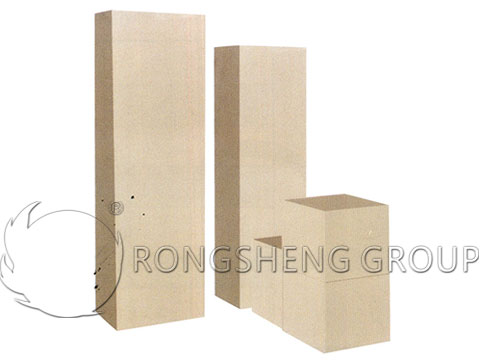
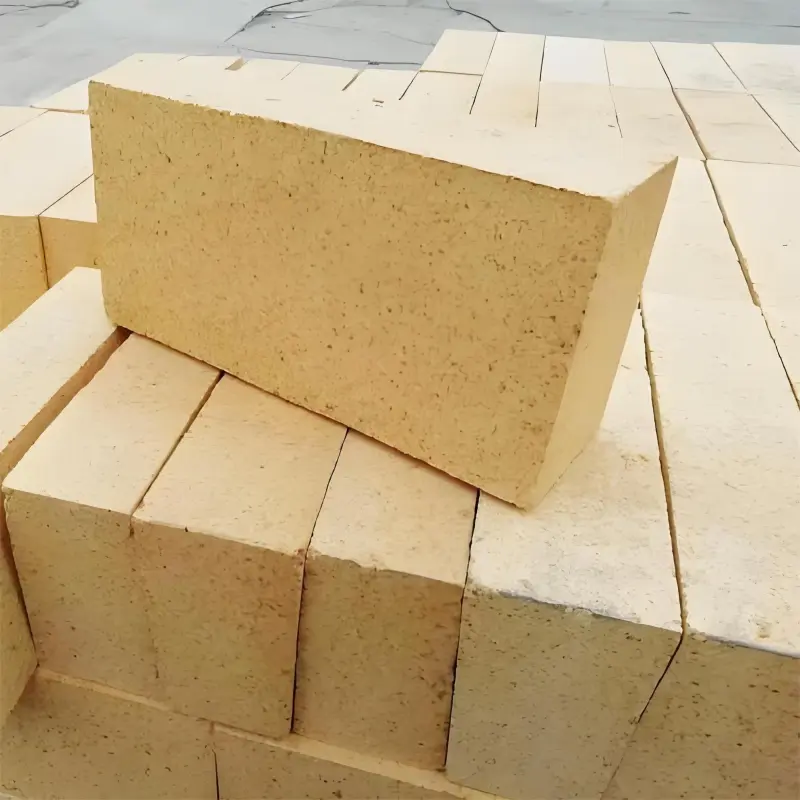
Protective packaging and shipment preparation for fused cast alumina-corundum refractory blocks to reduce transport damage and moisture exposure

6) Production, Quality Control, Packaging, Lead Time, and Customization: What to Verify Before You Order

For glass furnace refractories, procurement risk is not only about the product—it’s about repeatability. When a supplier runs an intelligent manufacturing workflow, quality control is typically more traceable across melting, casting, cooling, machining, and final inspection.

Packaging & delivery reliability

Industrial refractory blocks benefit from moisture-resistant, impact-reducing packaging and clear labeling for zone installation. Typical lead time for fused cast blocks is often 3–6 weeks depending on size, machining, and order volume.

Customization that matters

For critical zones, customization may include block geometry, machining tolerance, pre-assembly marking, and material grade selection aligned with glass composition and alkali load.

Rongsheng Refractory typically supports project-style communication—sharing inspection records, dimensional checks, and packaging standards—so site teams can reduce installation risk and avoid mismatch between drawings and delivered shapes.

7) Mini Case Snapshot: Extending Campaign Stability Through Material-Zone Matching

Scenario (typical): A glass melting line experiences recurring joint-edge spalling and increasing shell temperature in an alkali-exposed zone.

What the team changes: they re-check joint integrity and select a high-purity fused cast alumina-corundum grade for the most exposed areas, combined with stricter ramp-rate control and a defined wear threshold for planned replacement.

Observed outcome (commonly reported in practice): improved lining stability, fewer unplanned interruptions, and a clearer predictive maintenance rhythm—because chemical attack is addressed structurally (zone selection) and operationally (inspection cadence + temperature control).

Need a 1750°C Glass Furnace Lining Recommendation Based on Your Real Zone Data?

Share your furnace zone, glass composition, alkali exposure pattern, and expected campaign schedule. Rongsheng Refractory’s technical team can propose a material-grade and block layout approach, plus packaging and lead-time planning for shutdown windows.

Fast technical alignment: typical response within 24–48 hours for initial recommendations.

Include drawings, target temperature profile, and corrosion observations for higher accuracy.

Book a consultation for fused cast alumina-corundum blocks (up to 1750°C)
Name *
Email *
Message*

Recommended Products

Related Reading

Technical Advantages of Low-Density Bauxite Foam Refractory Bricks and Comparison with Traditional Refractory Materials

2026-01-10 | https://shmuker.oss-accelerate.aliyuncs.com/tmp/temporary/60ec5bd7f8d5a86c84ef79f2/60ec5bdcf8d5a86c84ef7a9a/20240305161110/eye.png 264 | https://shmuker.oss-accelerate.aliyuncs.com/tmp/temporary/60ec5bd7f8d5a86c84ef79f2/60ec5bdcf8d5a86c84ef7a9a/20240305160636/lable.png low-density bauxite foam refractory bricks high-temperature kiln refractory materials refractory brick customization energy efficiency improvement kiln performance optimization

Which Refractory Bricks Are Best for Glass Production Lines? Composite AZS Brick Selection Guide

2026-01-31 | https://shmuker.oss-accelerate.aliyuncs.com/tmp/temporary/60ec5bd7f8d5a86c84ef79f2/60ec5bdcf8d5a86c84ef7a9a/20240305161110/eye.png 227 | https://shmuker.oss-accelerate.aliyuncs.com/tmp/temporary/60ec5bd7f8d5a86c84ef79f2/60ec5bdcf8d5a86c84ef7a9a/20240305160636/lable.png Composite AZS bricks Glass furnace refractory selection AZS refractory brick series Glass manufacturing refractory materials Refractory corrosion resistance

Zhengzhou Rongsheng's High - Performance High - Alumina Refractory Bricks Drive Clients' Stable Business Growth

2026-02-06 | https://shmuker.oss-accelerate.aliyuncs.com/tmp/temporary/60ec5bd7f8d5a86c84ef79f2/60ec5bdcf8d5a86c84ef7a9a/20240305161110/eye.png 414 | https://shmuker.oss-accelerate.aliyuncs.com/tmp/temporary/60ec5bd7f8d5a86c84ef79f2/60ec5bdcf8d5a86c84ef7a9a/20240305160636/lable.png High - alumina refractory bricks Refractory material manufacturers High - temperature kiln solutions Energy - saving refractory bricks Industrial refractory materials

How to Choose High-Performance Alumina Refractory Bricks (Al2O3 >75%) with ISO 9001 & CE Certification

2026-02-17 | https://shmuker.oss-accelerate.aliyuncs.com/tmp/temporary/60ec5bd7f8d5a86c84ef79f2/60ec5bdcf8d5a86c84ef7a9a/20240305161110/eye.png 427 | https://shmuker.oss-accelerate.aliyuncs.com/tmp/temporary/60ec5bd7f8d5a86c84ef79f2/60ec5bdcf8d5a86c84ef7a9a/20240305160636/lable.png high alumina refractory bricks Al2O3 75% refractory brick ISO 9001 CE certified refractories industrial kiln refractory lining refractory brick selection guide

Key to Improving Glass Quality: Technical Trends and Practices of Glass Melt Corrosion-Resistant Refractories

2026-02-01 | https://shmuker.oss-accelerate.aliyuncs.com/tmp/temporary/60ec5bd7f8d5a86c84ef79f2/60ec5bdcf8d5a86c84ef7a9a/20240305161110/eye.png 293 | https://shmuker.oss-accelerate.aliyuncs.com/tmp/temporary/60ec5bd7f8d5a86c84ef79f2/60ec5bdcf8d5a86c84ef7a9a/20240305160636/lable.png Composite alumina - zirconia - silica bricks Glass melt corrosion - resistant refractories Glass manufacturing refractory bricks Customized refractory solutions Refractory applications in glass industry
Popular articles
https://shmuker.oss-accelerate.aliyuncs.com/data/oss/common/20250619164743/20250619/1b6c80f4e5d11be4d98419e5a8e805e1/Customized-Chemical-Composition-of-High-Alumina-Refractory-Brick.jpg
https://shmuker.oss-accelerate.aliyuncs.com/data/oss/common/20250528163959/20250528/808ef9e37fd0b6d00939f233eefff2a3/Ab182247a29ed4577bb7a7f6e04e43f04d.jpg
https://shmuker.oss-accelerate.aliyuncs.com/data/oss/common/20250619164743/20250619/1b6c80f4e5d11be4d98419e5a8e805e1/Customized-Chemical-Composition-of-High-Alumina-Refractory-Brick.jpg
https://shmuker.oss-accelerate.aliyuncs.com/data/oss/60e819f0790f5527ee3d7557/60ee491677a41e157184c1dc/20250530154053/Phosphate-bonded-high-alumina-castable.jpg
https://shmuker.oss-accelerate.aliyuncs.com/data/oss/common/20250604155810/20250604/3ff6af24b370f7fb40062a1cfca86045/3ee7eb90c35b90ac3df95682d1c6d339.jpg
https://shmuker.oss-accelerate.aliyuncs.com/data/oss/common/20250605150326/20250605/c0dff44ebeba247766b2ab922a29c5af/A87427e4f6213483cb86cfb2b156eb9b9A.jpg
https://shmuker.oss-accelerate.aliyuncs.com/data/oss/common/20250605161258/20250605/9f6927873c94cf0c560a6c5dd319a6ea/Aa0ba5b830a854d0a891b335cd736646ee.jpg
https://shmuker.oss-accelerate.aliyuncs.com/data/oss/60e819f0790f5527ee3d7557/60ee491677a41e157184c1dc/20250528114827/Anti-Spalling-High-Alumina-Bricks-4.jpg
https://shmuker.oss-accelerate.aliyuncs.com/data/oss/common/20250530170649/20250530/6c092509d3fc9e8b84113ee1aa25c9cb/1704352249541040.jpg
https://shmuker.oss-accelerate.aliyuncs.com/data/oss/20250719/317484e5f26362bb3c81aae9b5895ee8/9a42b2e9-c1fd-4502-87d5-9f2616f05ed1.jpeg
Recommended Reading
Contact us
Contact us
https://shmuker.oss-cn-hangzhou.aliyuncs.com/tmp/temporary/60ec5bd7f8d5a86c84ef79f2/60ec5bdcf8d5a86c84ef7a9a/thumb-prev.png