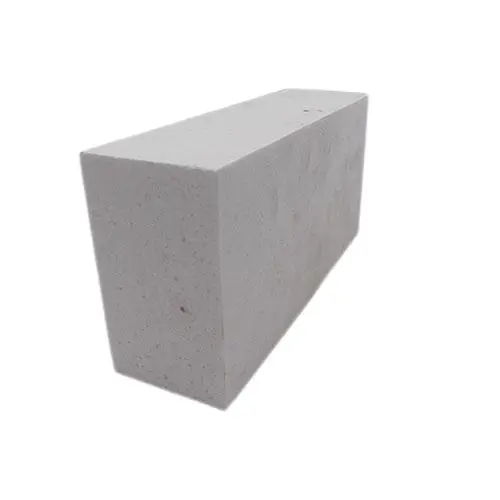
High-Purity Fused Cast Alumina Corundum Blocks: Extending Glass Furnace Service Life with Alkali Corrosion Resistance
Rongsheng Refractory
2026-03-19
Technical knowledge
This article objectively explains how high-purity fused cast alumina corundum blocks from Rongsheng Refractory help improve durability and operational stability in glass melting furnaces. It focuses on the material’s distinctive microstructure—approximately 50% α-alumina and 50% β-alumina forming a dense, interlocked crystal network—combined with a low-impurity formulation designed to reduce contamination risk and enhance resistance to strong alkali attack. Based on glass-industry operating conditions, the discussion links the microstructural advantages to practical outcomes, including slower corrosion rates, improved dimensional stability, reduced unplanned shutdowns, and longer furnace campaign life. Typical application scenarios are summarized for different processes such as float glass and container glass, alongside configurable specifications and customization options to match varied furnace zones and design requirements. To support decision-making at the awareness stage, the article also outlines a full lifecycle service approach—from selection guidance and quality control to packaging, delivery coordination, and technical follow-up—reinforced by anonymized customer feedback from export projects indicating improved service continuity and lower maintenance frequency under aggressive alkaline environments.
How High-Purity Fused Cast Alumina Corundum Blocks Extend Glass Furnace Campaign Life
In modern glassmaking—especially float glass, container glass, and specialty lines—furnace life is not “just refractory life.” It is production stability, glass quality risk control, energy efficiency, and maintenance planning. For many plants, the real enemy is not temperature alone, but strong alkali vapors, aggressive batch carryover, and corrosion-driven contamination that quietly shortens campaign life.
Rongsheng Refractory focuses on high-purity fused cast alumina corundum blocks engineered for glass-contact and high-corrosion zones. The core value is practical: reduce corrosion rate, stabilize structure, and help keep the furnace running longer with fewer unplanned interventions.
Why Traditional Refractories Lose the Fight in Alkali-Heavy Glass Furnaces
Many conventional alumina-based or zircon-bearing materials perform well under neutral conditions, but glass furnaces rarely stay “neutral.” Alkali (Na2O/K2O) from the batch and volatilized species can penetrate pores and grain boundaries, triggering reactions that weaken the structure over time. In plant terms, this usually shows up as:
Faster-than-expected wear in glass-contact or throat-related areas
Surface spalling and microcracking after thermal cycles
Increased risk of defects related to refractory interaction (stones, cords, inclusions)
Higher maintenance frequency and shortened campaign planning window
The industry lesson is consistent: corrosion control is campaign control. That is where high-purity fused cast alumina corundum blocks become a meaningful upgrade rather than a simple “material change.”
The Technical Principle: Interlocked α/β-Alumina Structure + Low Impurities
Rongsheng’s high-purity fused cast alumina corundum blocks are designed around a robust microstructure: approximately 50% α-alumina and 50% β-alumina forming a dense, interlocked crystal network. In practical refractory engineering, this matters for two reasons:
1) Interlocking crystals improve structural integrity under corrosion and thermal stress
Interlocked crystalline phases resist crack propagation better than loosely bonded grain boundaries. When alkali attack begins at the surface, the structure is less likely to “open up” and accelerate penetration. This typically translates into more stable wear profiles and fewer localized weak points.
2) Low impurity formulation reduces reactive pathways and contamination risk
In glass-contact zones, impurities are not just a chemical detail—they can become a quality variable. Lower impurity content helps reduce the chance of undesirable reactions that lead to faster corrosion or potential glass defects.
The outcome is not a marketing promise; it is a materials logic: dense fused cast structure + stable crystalline network + cleaner chemistry equals improved resistance against strong alkali corrosion and longer furnace service life under comparable operating conditions.
Reference Data Buyers Actually Use (Typical Ranges)
For engineering managers and procurement teams, decisions often come down to measurable signals—density, porosity, corrosion trend, and maintenance impact. The table below provides typical reference ranges commonly expected for high-purity fused cast alumina corundum blocks used in alkali-challenged furnace zones. Exact figures depend on design and service conditions.
Parameter
Typical Range
Why It Matters in Glass Furnaces
Bulk density
~3.30–3.50 g/cm³
Higher density generally supports better corrosion resistance and lower penetration.
Apparent porosity
~1.0–5.0%
Lower porosity helps reduce alkali infiltration and slows corrosion kinetics.
Main phases
~50% α-Al2O3 / ~50% β-Al2O3
Interlocked structure improves mechanical stability under attack and thermal cycling.
Alkali corrosion trend (qualitative)
Lower wear rate vs. conventional alumina bricks in strong-alkali zones
Supports longer campaigns, fewer hot repairs, and more predictable maintenance windows.
Typical campaign-life uplift (field feedback)
~10–30% (zone-dependent)
Real improvement is usually localized to the most aggressive corrosion zones.
Note: The “campaign-life uplift” range is a consolidated reference based on typical glass furnace operating scenarios and buyer feedback; results vary by furnace design, batch composition, redox conditions, temperature profile, and installation quality.
Where These Blocks Deliver the Most Value: Typical Glassmaking Scenarios
In practice, high-purity fused cast alumina corundum blocks are not meant to replace every refractory in the furnace. Their ROI becomes clearer when applied to zones where alkali corrosion, glass contact, and thermal gradients combine to accelerate wear.
Float Glass: Long campaigns, strict stability demands
Float lines depend on steady thermal balance and predictable wear. When corrosion-induced geometry changes occur in critical zones, operators may compensate with more frequent adjustments—often at an efficiency cost. Dense fused cast corundum blocks can help stabilize those high-risk sections, improving operational predictability.
Container Glass: Alkali volatility and quality sensitivity
Container plants often face aggressive volatilization and frequent pull changes. Lower-impurity refractory choices reduce the likelihood of secondary reactions that can contribute to defects and premature wear, supporting a cleaner and more stable production rhythm.
Specialty & Technical Glass: When “small contamination” is a big issue
Specialty compositions can be less forgiving. Selecting high-purity fused cast alumina solutions provides an added layer of risk control, especially in areas where glass contact and chemical attack intersect.
Customization & Fit: Sizes, Drawings, and Practical Delivery Details
One reason fused cast blocks succeed in glass furnaces is that they can be specified to match the real furnace geometry—not forced into it. Rongsheng Refractory supports multi-size configurations and custom drawings to align with typical procurement and engineering workflows.
Common buyer requirements supported
Custom block dimensions based on furnace drawings and installation constraints
Batch consistency control and traceability documentation (as requested)
Export-ready packaging for sea freight and multi-handling logistics
Technical coordination for lining selection and zone-by-zone recommendations
Anonymous Buyer Feedback: What Changes After Switching
Across export projects, the most useful feedback is rarely poetic—it is operational. Below are representative, anonymized comments compiled from typical customer conversations after adopting high-purity fused cast alumina corundum blocks in high-corrosion zones:
“Wear became more predictable in the alkali-heavy section. We planned maintenance with better confidence and reduced emergency patching.”
“The lining held up better during long runs. What we valued most was the supplier’s drawing review and delivery coordination.”
“We saw fewer refractory-related disturbances in the targeted zone. Installation guidance helped avoid fitting errors.”
Full Lifecycle Support: From Specification to Post-Installation
In B2B refractory purchasing, “good material” is only half the story. The other half is how reliably the product is selected, manufactured, delivered, and supported. Rongsheng Refractory positions its service around a lifecycle mindset:
Pre-quotation technical check: confirm zone function, temperature, alkali severity, and dimensional needs.
Drawing & specification alignment: reduce tolerance and fitting risks before production.
Manufacturing & quality control: maintain consistency for critical furnace zones.
Export logistics support: packaging and shipping coordination for safer arrivals.
Application follow-up: feedback loop for optimization in the next maintenance cycle.
Request the Right High-Purity Fused Cast Alumina Corundum Block for Your Furnace Zone
If you share your furnace zone, operating conditions, and drawings (or target dimensions), Rongsheng Refractory can recommend a practical specification and supply plan—focused on corrosion resistance, stability, and long-term maintainability.