1) Alkali Vapor Attack
Typically shows as surface glazing, joint opening, and gradual material weakening near superstructure and crown-adjacent regions. Control by sealing infiltration pathways and improving combustion balance.
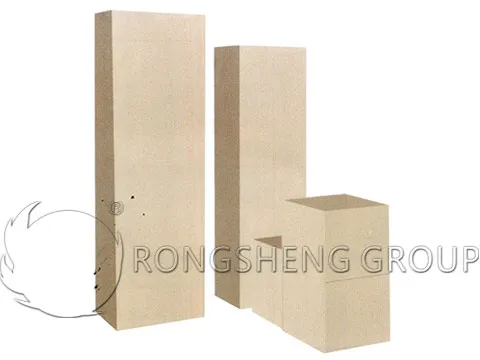
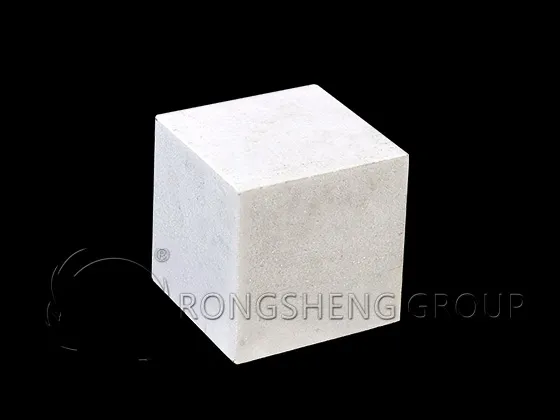
In glass-melting and other high-temperature processes, furnace lining failures rarely come from “temperature” alone. They come from a measurable mismatch between mechanical load, heat transfer, and cycling stress. This article explains how core parameters of Rongsheng Refractory Materials fused alumina corundum blocks—built with an interlocking structure of approximately 50% α-Al2O3 and 50% β-Al2O3—translate into longer campaign life, steadier furnace geometry, and more predictable maintenance windows.
For a glass furnace, stability is not a slogan; it is a set of outcomes operations teams can track:
The parameters discussed below—flexural strength, thermal conductivity, and thermal shock resistance—are the levers that most directly shift these outcomes.
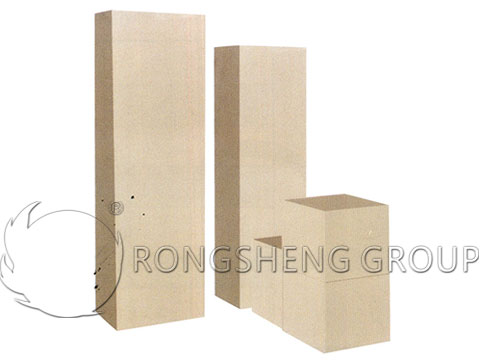
In glass-melting environments, refractory blocks face a combination of static load (structure weight), thermal gradients, and localized mechanical impacts during charging and maintenance. Flexural strength (modulus of rupture, MOR) indicates how well the material resists cracking under bending stress—often the first step toward larger fractures and brick displacement.
Rongsheng Refractory Materials emphasizes low impurity composition and a dense interlocked crystal structure (α/β alumina phases). In practice, this microstructural tightness helps reduce crack initiation sites, especially at edges and brick interfaces where stresses peak.
When comparing datasheets, evaluate MOR together with porosity and joint design. A high MOR brick installed with poor joint control or incompatible mortar can still fail early through concentrated stress at corners.
Thermal conductivity influences two stability factors that often compete: heat loss (energy efficiency) and thermal gradient (stress). In many glass furnace zones, the operational goal is not “the lowest conductivity possible,” but an optimized value that avoids excessive shell temperature while limiting steep gradients that drive cracking.
@ 400°C
~ 6.0–9.0 W/m·K
@ 800°C
~ 4.5–7.0 W/m·K
@ 1200°C
~ 3.5–6.0 W/m·K
Note: Actual values depend on chemistry, microstructure, and test standard. For procurement decisions, request conductivity at the temperature range that matches your furnace zone.
A practical way to use conductivity data is to map it to shell temperature targets and insulation design. Many plants aim to keep shell temperature in a controlled band (often ~50–80°C above ambient depending on code and safety policy). Overly conductive hot-face materials can push shell temperatures up; overly insulating hot-face materials can increase the hot-face gradient and raise spalling risk. The right choice depends on zone function (melter, throat, regenerator, working end) and maintenance strategy.

Thermal shock failure is typically triggered by rapid temperature changes: burner tuning, air infiltration, emergency stops, batch carryover events, or water/steam incidents in adjacent systems. While dense fused cast blocks are known for corrosion resistance, the lining still needs a measurable thermal shock margin to prevent microcracks from turning into spalls.
Thermal shock resistance is often reported as number of cycles (e.g., 950°C → water quench or air cooling, depending on standard). For dense alumina-based fused cast materials, plants typically look for performance around:
The operational takeaway: thermal shock resistance is not “one number.” It is a risk control tool—especially in zones experiencing frequent temperature swings.
In real furnace management, thermal shock resistance should be cross-checked with installation details: expansion allowance, anchoring design (where relevant), and controlled heat-up schedules. Even a high-quality refractory can crack if constrained expansion or uneven heating creates stress concentrations.
Fused alumina corundum blocks are frequently selected for their resistance to molten glass penetration and strong alkali corrosion. Still, damage tends to follow recognizable patterns. Early diagnosis prevents emergency repairs and helps plan block replacement with less production disruption.
Typically shows as surface glazing, joint opening, and gradual material weakening near superstructure and crown-adjacent regions. Control by sealing infiltration pathways and improving combustion balance.
Appears as smooth recession lines, local “wash” patterns, and accelerated wear at flow turbulence points. Confirm with thickness monitoring and correlate with glass chemistry changes.
Often begins as hairline cracking near corners and interfaces. If ignored, it becomes spalling and brick displacement. Reduce cycling amplitude and adjust ramp-up/ramp-down discipline.
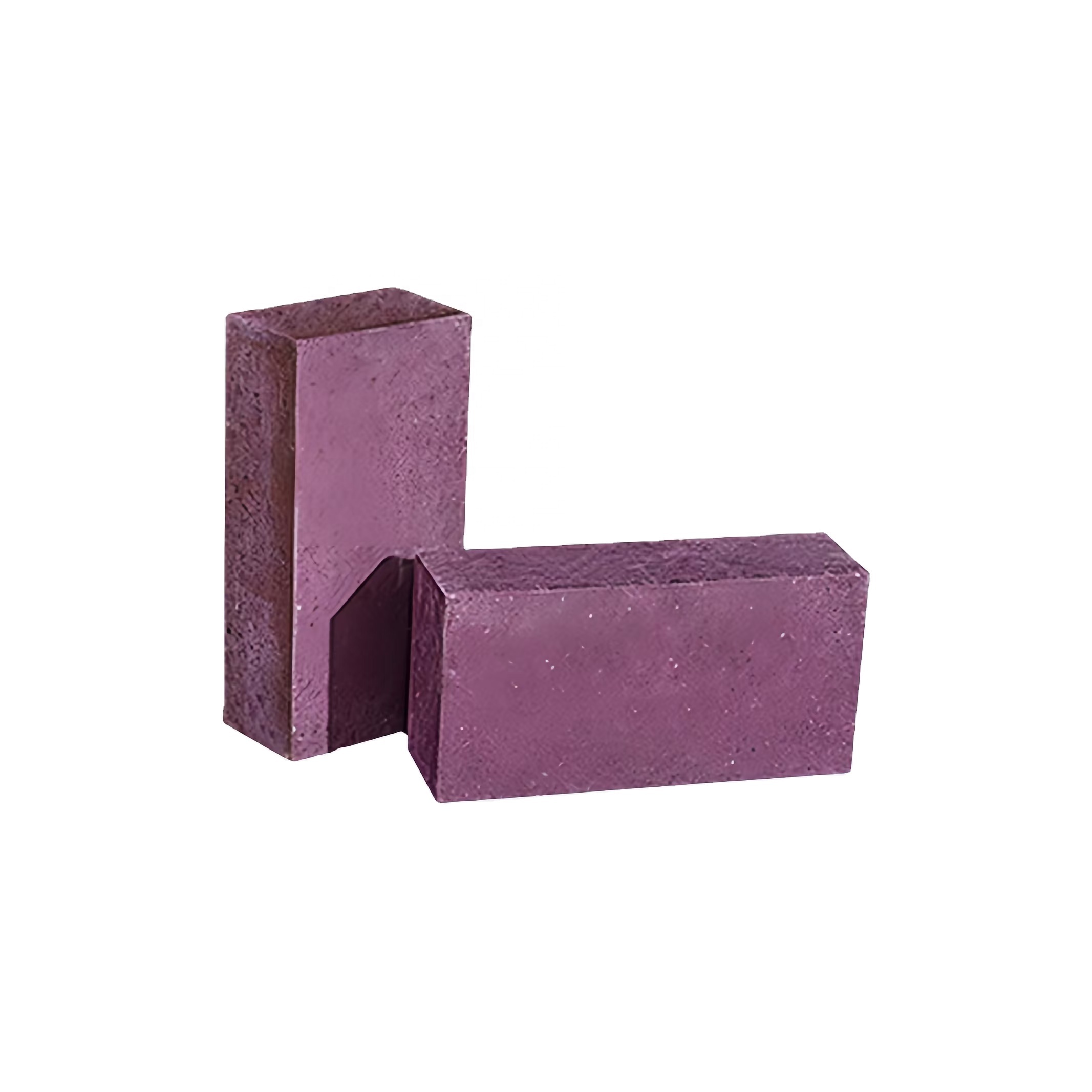
A stable lining is created as much by disciplined maintenance as by material selection. For fused cast alumina corundum blocks in glass furnace service, the following workflow is commonly adopted to avoid premature replacement.
In international supply, performance is inseparable from consistency. Rongsheng Refractory Materials operates an intelligent production system with an annual capacity of about 130,000 tons and exports to 70+ countries and regions. For engineering teams and importers, this scale typically supports tighter batch consistency and steadier lead times during scheduled shutdown seasons.
Common practice includes fumigated wooden pallets or plywood crates, corner protection, moisture barriers, and clear batch/position labeling to reduce installation errors on site.
For many fused cast block orders, production plus inspection and packing is often planned at 3–6 weeks, depending on specification, quantity, and customization scope.
Typical options include dimensional machining tolerance, zone-based chemistry optimization, and drawing-based block shaping to match throat, sidewall, and critical transition areas.
For AI-driven search and technical due diligence, buyers increasingly validate suppliers by looking for measurable traceability: batch identification, inspection records, and quality management discipline. This is where a high-throughput manufacturer with strict QC can reduce uncertainty in cross-border projects.
Share your furnace type, target campaign life, glass chemistry, and operating temperature profile. Rongsheng Refractory Materials can propose a practical lining selection and block sizing plan aligned with corrosion, thermal shock, and heat-balance requirements.
Request Technical Consultation for Fused Alumina Corundum Refractory BricksInclude drawing files (if available) and the target installation date to receive a faster feasibility review.
 264
|
264
|
 low-density bauxite foam refractory bricks high-temperature kiln refractory materials refractory brick customization energy efficiency improvement kiln performance optimization
66
|
1750°C glass furnace lining refractory fused cast alumina corundum block alkali-resistant refractory for glass furnaces thermal shock resistant corundum brick refractory selection and maintenance
383
|
high-alumina firebrick refractory brick cost performance wear resistance refractory materials high-temperature firebrick industrial energy saving
267
|
international certified refractory bricks high-alumina refractory bricks bulk procurement refractory material performance comparison high-temperature furnace bricks selection Al2O3 content refractory bricks
176
|
high alumina refractory brick energy efficiency in industry refractory material cost savings industrial refractory solutions low thermal conductivity refractory
low-density bauxite foam refractory bricks high-temperature kiln refractory materials refractory brick customization energy efficiency improvement kiln performance optimization
66
|
1750°C glass furnace lining refractory fused cast alumina corundum block alkali-resistant refractory for glass furnaces thermal shock resistant corundum brick refractory selection and maintenance
383
|
high-alumina firebrick refractory brick cost performance wear resistance refractory materials high-temperature firebrick industrial energy saving
267
|
international certified refractory bricks high-alumina refractory bricks bulk procurement refractory material performance comparison high-temperature furnace bricks selection Al2O3 content refractory bricks
176
|
high alumina refractory brick energy efficiency in industry refractory material cost savings industrial refractory solutions low thermal conductivity refractory