High-Temperature Refractory Materials: Classification & Performance Comparison of Fused Corundum Bricks for Industrial Furnaces
Rongsheng Refractory
2026-03-21
Technical knowledge
This article provides a technical, decision-oriented overview of high-temperature industrial refractory materials, comparing common options such as fireclay bricks, high-alumina bricks, and magnesia-carbon refractories across key selection criteria: thermal stability, thermal shock resistance, and insulation efficiency. It then focuses on fused corundum refractory bricks, explaining how their dense microstructure and advanced fusion manufacturing contribute to superior slag resistance, strong thermal shock performance, and reliable long-term service in harsh operating cycles. With application insights for steel, nonferrous metallurgy, power generation boilers, and petrochemical high-temperature units, the guide highlights how proper refractory selection can improve equipment uptime, reduce heat loss, and support energy-saving operation. Practical installation and maintenance recommendations, plus real-world case takeaways, help engineering teams and procurement decision-makers select the most suitable lining solution. To learn more, explore Ronsen Refractory’s fused corundum brick solutions and global supply support.
In steel, non-ferrous metallurgy, power generation, and petrochemicals, refractory selection is rarely “just materials.” It is a technical decision that affects furnace stability, maintenance windows, energy consumption, and ultimately the total cost of ownership. This guide compares mainstream refractory categories and highlights where fused corundum refractory bricks can deliver measurable value—especially under high temperature, severe thermal cycling, and demanding corrosion environments.
Best for: high-load hot faces, severe thermal shock zones, long campaigns
Decision drivers: temperature stability, thermal shock resistance, insulation strategy
For buyers: engineering + procurement alignment (specs, delivery, consistency)
1) What High-Temperature Operations Really Need From Refractories
Engineering teams often start with maximum service temperature, but real-world reliability depends on a broader set of properties. In continuous or cyclic operations, refractory failure typically comes from a combination of thermal shock, slag/chemical attack, mechanical abrasion, and structural fatigue.
Temperature stability: adequate refractoriness under load for your peak + continuous operating range.
Thermal shock resistance: resilience against rapid heating/cooling, burner cycling, door openings, and uneven temperature gradients.
Thermal management: the right balance between hot-face strength and back-up insulation to reduce heat loss.
Chemical compatibility: resistance to slags, alkalis, acids, and metal penetration depending on process.
Dimensional consistency: tight tolerances reduce joints and gas leakage, improving furnace tightness and efficiency.
2) Common Refractory Types: Fast Comparison by Performance & Use Case
Below is a practical comparison for B2B selection. Values are typical ranges used in industry discussions; final decisions should be validated against your furnace design, atmosphere, and process chemistry.
Refractory type
Typical strengths
Common limitations
Best-fit applications
Fireclay bricks
Cost-effective; decent general refractoriness
Lower hot strength; moderate thermal shock in severe cycling
General-purpose kiln & furnace zones with moderate duty
High alumina bricks
Higher refractoriness; good wear resistance
May struggle in extreme thermal shock or aggressive slags depending grade
Excellent slag resistance in basic environments; strong in steelmaking
Oxidation of carbon if not protected; process-sensitive
BOF/EAF, ladles, high-basic slag contact areas
Silica bricks
High-temperature capability; good for specific thermal regimes
Sensitive to thermal shock and phase changes if cycled improperly
Coke ovens, glass furnaces (process-dependent)
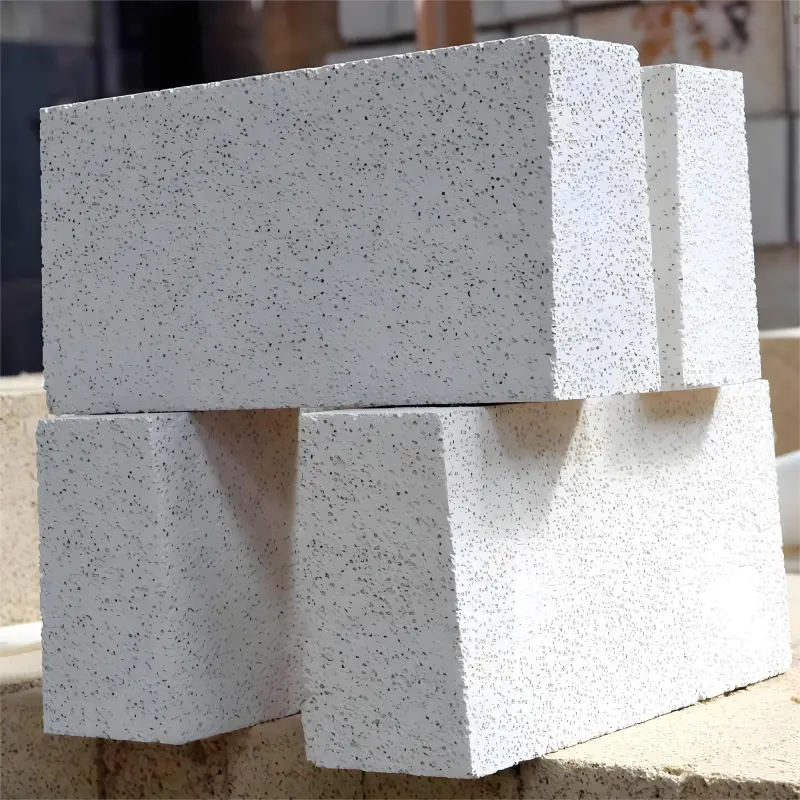
Insulating firebricks (IFB)
Low thermal conductivity; reduces heat loss
Lower mechanical strength; not for severe abrasion/hot-face impact
Back-up insulation layers, lower-stress zones
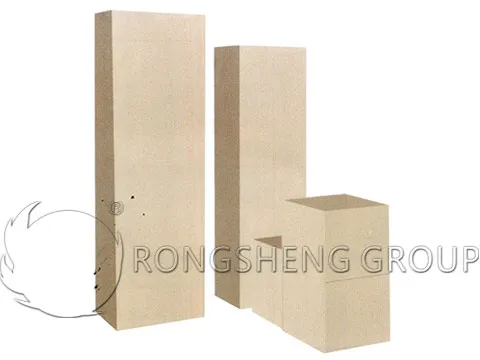
Fused corundum bricks (electrofused alumina)
Dense structure, high hot strength, strong corrosion resistance, stable at very high temperatures
Higher specification level; requires proper joint design and installation discipline
High-load hot faces, severe cycling zones, critical linings in metallurgy & energy
Buyer note: many “failures” are not material defects but mismatches—e.g., choosing a strong hot-face brick without a compatible back-up insulation plan, or using an unsuitable mortar under rapid cycling.
3) Why Fused Corundum Bricks Stand Out: Structure, Process & Consistency
Fused corundum refractory bricks are typically produced by advanced melting and casting/sintering routes that aim to form a highly dense microstructure. For high-temperature industrial users, density and structural uniformity are not “lab talking points”—they directly influence penetration resistance (slag/metal), thermal fatigue behavior, and dimensional stability under long campaigns.
Dense structure = fewer pathways for infiltration
In aggressive service zones, reduced open porosity helps limit slag/alkali penetration and slows down chemical wear. In practice, plants often see more predictable wear profiles and fewer “surprise” spalls.
Process control supports batch-to-batch stability
Procurement teams value consistent geometry and properties because it reduces on-site cutting, shortens lining time, and improves joint quality—key for tight furnaces and stable combustion.
Quality systems matter for global projects
ISO-style documentation, traceability, and standardized testing help multinational EPCs and end users align material approval with commissioning schedules and compliance requirements.
4) Thermal Shock Resistance & Insulation: What the Numbers Mean for Energy and Uptime
Two performance levers often determine whether a furnace runs smoothly through planned maintenance: thermal shock resistance and heat-loss control. In many industrial lines, temperature cycling is unavoidable—start/stop operations, load changes, burner tuning, door openings, and emergency shutdowns all create thermal gradients that generate stress.
Reference data points used by engineers (indicative ranges)
Metric
Why it matters
Typical engineering reference
Thermal conductivity (hot-face system)
Drives shell temperature, fuel use, and ambient safety
Well-designed lining upgrades can reduce heat loss by 5–15% depending on baseline
Thermal shock behavior (rapid cycling)
Predicts spalling risk and unplanned shutdown probability
Thermal-cycle improvements often extend lining life by 20–40% in cycling zones (process-dependent)
Bulk density / open porosity
Impacts infiltration, corrosion wear, and structural reliability
Denser microstructures typically correlate with improved penetration resistance
Dimensional tolerance (brick geometry)
Controls joint thickness, leakage paths, and stress concentration points
Tighter tolerances reduce rework and improve lining integrity
Practical interpretation: fused corundum bricks often become the preferred option where both high temperature and cycling stress exist—especially when chemical wear adds a third stressor.
5) Where Fused Corundum Bricks Deliver Value: Industry Use Scenarios
Different industries stress refractories in different ways. Below are typical decision points where fused corundum solutions are often evaluated for performance stability and lifecycle cost control.
Steel industry furnaces
Suitable for high-load zones where hot strength and thermal fatigue resistance matter. Helps keep lining profiles stable across long campaigns and reduces patching frequency in cycling areas.
Non-ferrous melting & holding
Dense structure can support improved resistance to penetration and chemical wear under high-temperature exposure, especially where process stability is critical to product quality.
Power plant boiler linings
In thermal cycling and load changes, robust refractory design can reduce spalling risk and help stabilize maintenance intervals, supporting safer and more efficient operation.
Petrochemical high-temp units
Where atmosphere and process chemistry challenge conventional linings, higher-grade refractories are evaluated to improve reliability and reduce unplanned downtime.
Buyer reality: what global projects ask for
International buyers often prioritize stable supply, consistent quality, and project responsiveness. Rongsheng Refractory Materials supports global delivery capability with an annual capacity of about 130,000 tons and a sales network covering 70+ countries, enabling better continuity for multi-site groups and EPC schedules.
6) Installation & Maintenance Tips That Protect Performance (and Budget)
Even premium refractories can underperform if installation control is weak. The following practices are commonly used to reduce thermal leakage, avoid stress concentration, and extend lining life—particularly for dense, high-performance bricks.
Joint discipline and geometry control
Keep joint thickness consistent to reduce hot spots and gas leakage.
Use compatible mortars/adhesives per temperature and atmosphere.
Avoid excessive field cutting that increases micro-crack initiation points.
Heat-up curve and dry-out are not optional
Follow a controlled dry-out to prevent steam pressure spalling.
Introduce temperature ramps gradually to reduce thermal gradients.
Document the curve; it becomes valuable evidence for root-cause analysis.
Inspect the “hidden” indicators
Track shell temperature trends to identify insulation deterioration early.
Map wear zones instead of relying on single-point measurements.
Plan targeted repairs before cracks connect into spall-prone networks.
Customer case (anonymized): A metallurgical user facing repeated shutdowns from hot-face spalling upgraded critical cycling zones to a higher-density refractory design and enforced a controlled heat-up procedure. Over the next operating period, unplanned refractory-related stoppages were reduced by about 30%, with noticeably more stable shell temperature readings.
7) Quick FAQ (How Engineers & Buyers Ask in Real RFQs)
How do I choose between high alumina bricks and fused corundum bricks?
Start with your failure mode: if the issue is mainly steady wear at moderate severity, high alumina grades may be sufficient. If you face severe thermal cycling, high hot-face load, or infiltration-related damage, fused corundum bricks are often evaluated for their dense structure and stability. Confirm with your operating temperature profile, atmosphere, and slag/chemical composition.
Will a denser refractory always improve insulation and energy savings?
Not necessarily. Dense refractories usually excel on the hot face for durability, but insulation is typically delivered by a layered lining design (hot-face dense brick + back-up insulation materials). The best outcome often comes from optimizing the full lining system rather than relying on one material to do everything.
What information should we include when requesting a quotation?
Include furnace type and zone, operating temperature range, atmosphere, heating/cooling cycles, contact media (slag/alkali/metal), lining thickness and layout, drawings if possible, target campaign life, and preferred delivery schedule. This helps suppliers propose the correct grade and installation recommendations.
How can we reduce spalling during commissioning?
Control dry-out and heat-up curves, use compatible mortars, keep joints uniform, and avoid rapid temperature jumps. In many cases, commissioning discipline delivers “free” service-life gains before any material upgrade is even considered.
Explore Rongsheng Fused Corundum Refractory Brick Solutions for High-Temperature Furnaces
For engineering-led procurement, Rongsheng Refractory Materials can support material selection with specification alignment, typical application guidance, and stable supply planning—especially for steel, non-ferrous, power, and petrochemical high-temperature units.
Suggested for inquiries: share your furnace zone, operating temperature profile, cycling frequency, and corrosion media for a faster technical recommendation.
2025-08-26|197|B2B export sales strategies refractory material website optimization industrial product lead generation international buyer engagement SEO for heavy industry products