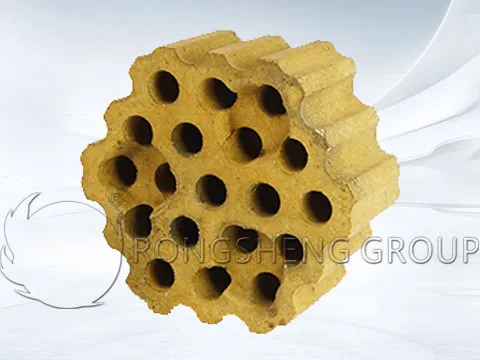
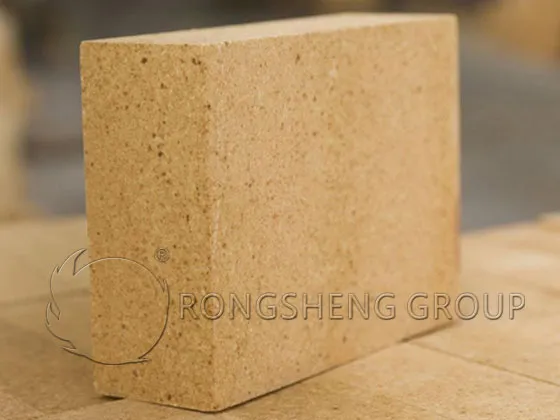
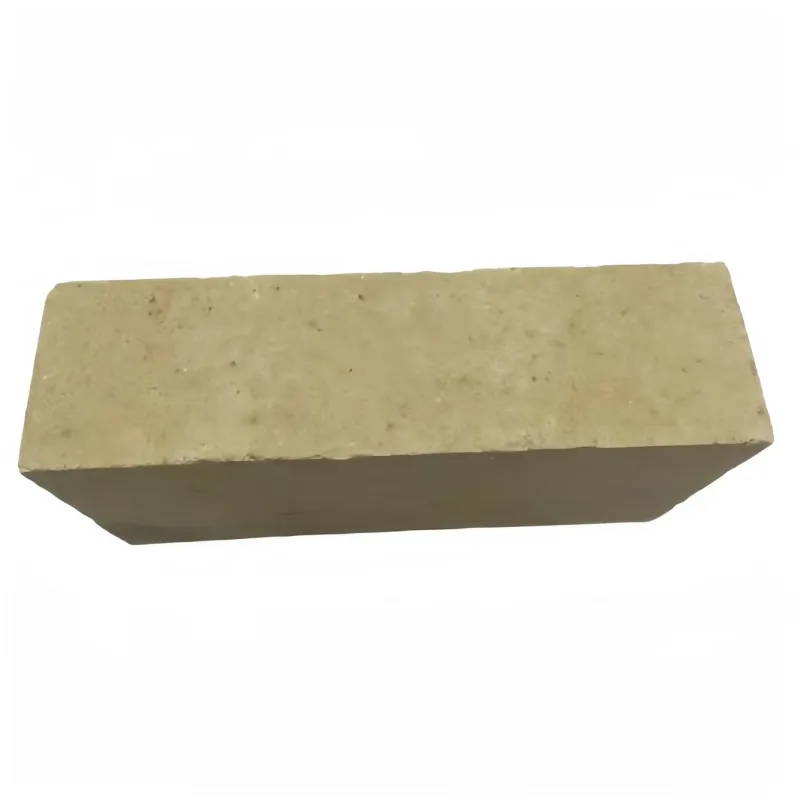
Selecting refractory lining for high-temperature metallurgy is rarely a “pick the highest rating” decision. Real furnaces fail from thermal shock, chemical corrosion, slag penetration, and mechanical abrasion—often in combination. In many steel, non-ferrous, and chemical operations, sintered zirconia corundum bricks have become a reliable choice for stabilizing furnace operation and extending lining life—helping your high-temperature furnace run more stable and last longer.
Quick decision clue: If your furnace cycles frequently, suffers sudden temperature swings, or faces aggressive slag/metal vapor attack, zirconia–alumina composite systems typically outperform single-component alumina bricks in stability and service life.
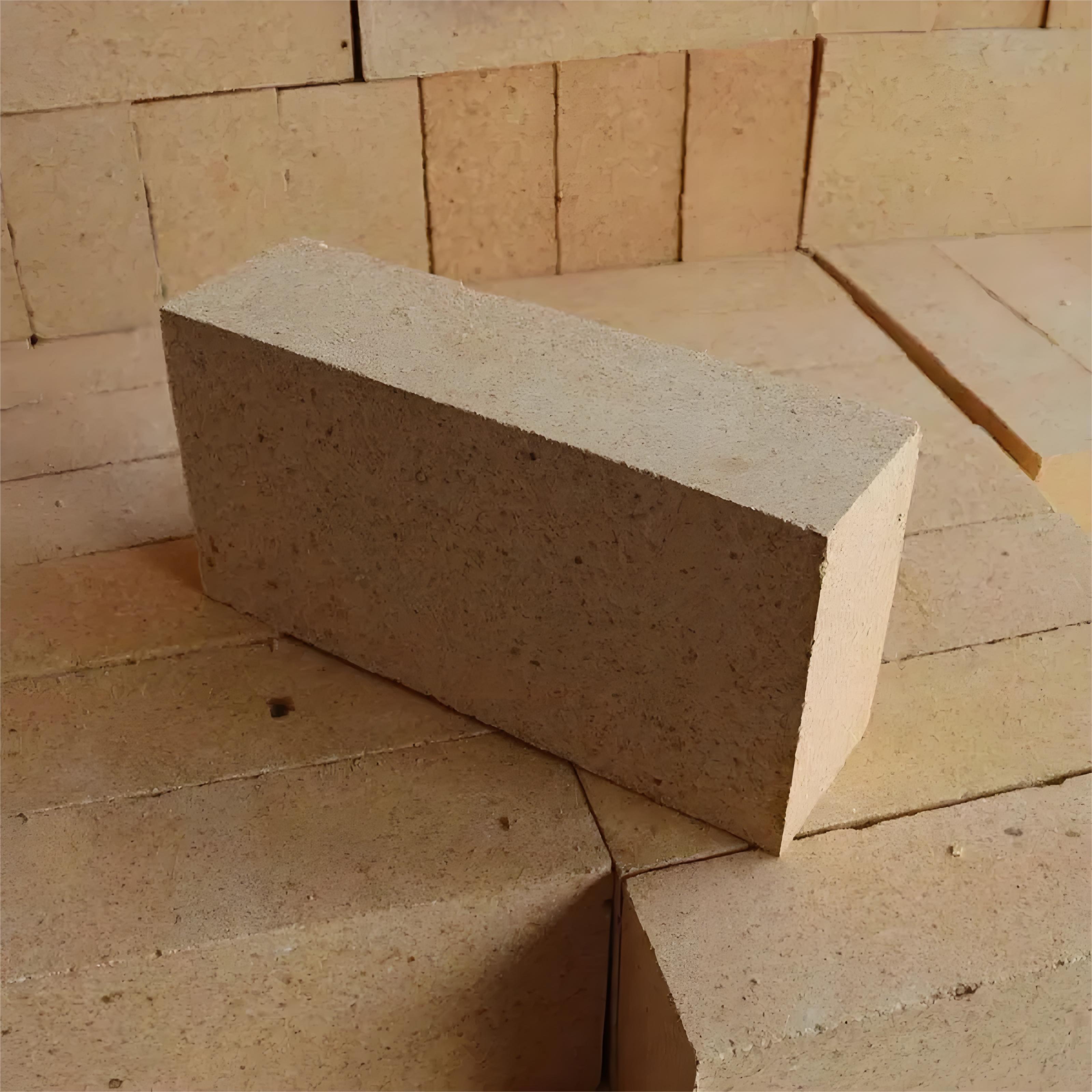
A sintered zirconia corundum brick is a high-performance refractory made from a carefully engineered composite—most commonly high-grade bauxite (alumina source) and zircon sand (zirconia source). The goal is not just high refractoriness, but balanced resistance to the three furnace “killers”: heat shock, slag corrosion, and structural fatigue.
In practical terms, zirconia contributes crack-arrest behavior and improved corrosion resistance in harsh melts, while corundum (Al2O3) delivers mechanical strength and high-temperature stability. The sintering process further improves density and consistency—critical for predictable performance in large-scale industrial kilns and smelting furnaces.
| Component | Typical Content | What It Improves in Real Furnaces |
|---|---|---|
| Al2O3 (from bauxite/corundum) | 70–90% | High hot strength, abrasion resistance, stable structure at high temperature |
| ZrO2 (from zircon) | 8–25% | Thermal shock resistance, corrosion resistance, reduced crack propagation |
| SiO2 + minor oxides | ≤6% (controlled) | Controls glassy phase; affects slag penetration and high-temp stability |
Note: Actual design depends on slag chemistry, furnace cycling, and lining layout. Final composition should be confirmed by your operating data and engineering drawings.
Many purchasing teams focus on “maximum temperature,” but lining success is usually decided by heat cycling + chemical attack + load. Below is a practical reference comparison used by engineers when evaluating candidates for extreme metallurgical service.
| Key Indicator | Sintered Zirconia Corundum Brick | High-Alumina Brick (Reference) | Why It Matters on Site |
|---|---|---|---|
| Refractoriness / service range | 1770–2000°C (application-dependent) | 1600–1770°C | Avoids softening, deformation, and premature structural failure |
| Apparent porosity | 14–18% | 18–24% | Lower porosity reduces slag penetration and chemical corrosion paths |
| Cold crushing strength (CCS) | 80–140 MPa | 50–90 MPa | Resists mechanical load, charging impact, and lining wear |
| Thermal shock resistance | Stronger (fewer spalls under cycling) | Moderate | Directly impacts maintenance frequency and unplanned shutdown risk |
| Slag/corrosion resistance | Higher in aggressive melts | Medium | Improves campaign life where slag is high FeO, alkali, or fluoride-rich |
“For furnaces with frequent start-stop or aggressive slag, stability is often more valuable than a single peak-temperature number. A dense zirconia–alumina composite can reduce spalling and keep the lining geometry stable over time.”
— Refractory application engineer (field note, multi-industry commissioning)
Below are common industrial scenarios where sintered zirconia corundum bricks are chosen not for marketing reasons, but because they match the failure mode of the lining.
In continuous casting, refractories face rapid temperature changes, molten steel erosion, and aggressive slag carryover. Zirconia corundum bricks are frequently specified for impact areas, slag line zones, and high-wear corners where spalling and washout are common.
Non-ferrous furnaces often combine high temperature + flux chemistry (including fluoride or alkali components) that accelerates corrosion. A zirconia–alumina composite can offer stronger chemical stability and reduce the rate of penetration—especially in hot-face lining sections subjected to frequent skimming and charging.
Typical project requirement patterns include tight dimensional tolerances (to reduce joint gaps), controlled porosity for corrosion resistance, and consistent batch-to-batch performance to maintain stable campaigns.
Chemical furnaces can expose linings to high-velocity gases, particulate abrasion, and chemically complex atmospheres. In such cases, the value proposition is often a balance: stable structure at temperature, reliable strength, and a lining system designed to reduce unplanned stoppages.
In refractory procurement, a “good sample” is not enough—industrial buyers need repeatability. Automated batching, controlled sintering curves, and standardized inspection routines help keep properties stable across large orders and long-term supply agreements.
Automated weighing (±0.2% batching accuracy), moisture control, high-pressure forming, and programmable sintering profiles help reduce density fluctuations that often lead to localized spalling.
ISO 9001-based management and CE-oriented compliance practices help document traceability, inspection standards, and delivery consistency—key for audits and multi-site rollouts.
Typical controls include bulk density, apparent porosity, CCS, dimensional tolerance, and selected corrosion/thermal shock tests based on your furnace duty cycle.
When buyers say “we need a 2000°C refractory,” they often mean “we need a lining that survives our real operating pattern.” A more reliable approach is to define your conditions first, then match the brick grade and shape.
Interactive prompt: Click to get a custom refractory selection template you can share with your furnace engineer—includes operating parameters, slag checklist, and drawing notes for shaped brick customization.
Even a premium refractory can fail early if the lining system is installed like a generic alumina brick job. For zirconia corundum bricks, most on-site issues come from joint control, expansion allowance, and drying/heating schedules.
“After switching to tighter tolerance bricks and standardizing the dry-out curve, we reduced corner spalling significantly and stabilized the maintenance window.”
— Customer feedback from a high-temperature smelting line (confidential site reference)
Sintered zirconia corundum bricks are typically supplied in standard formats (straight bricks, wedges, arches) and engineered shapes. For complex zones—burners, tap holes, slag lines, corners—customization can reduce cutting waste, tighten joints, and improve lining stability.
For global projects, responsiveness matters. Rongsheng’s service network across 30+ countries is designed to support selection discussions, sampling, and technical alignment—so your team can move from drawing to delivery with fewer iterations.
Share your operating temperature, cycling pattern, slag chemistry, and lining drawings. Receive a practical recommendation: suitable grade, dimensions, quantity list, and installation notes—built for your exact duty conditions so your high-temperature furnace runs more stable and lasts longer.
 451
|
451
|
 high-temperature insulation materials
aluminum foam bricks
high-performance thermal insulation
energy-saving refractory bricks
corrosion-resistant insulation
288
|
high-performance alumina refractory bricks
ISO9001 certification
CE certification
refractory materials
industrial kiln protection
185
|
high alumina refractory bricks
ISO9001 certified refractory bricks
CE certified kiln refractory
alumina refractory brick selection
industrial kiln refractory materials
267
|
international certified refractory bricks
high-alumina refractory bricks bulk procurement
refractory material performance comparison
high-temperature furnace bricks selection
Al2O3 content refractory bricks
141
|
custom refractory bricks
alumina-mullite brick
high temperature kiln lining
Al2O3 content customization
SiO2 MgO ratio optimization
high-temperature insulation materials
aluminum foam bricks
high-performance thermal insulation
energy-saving refractory bricks
corrosion-resistant insulation
288
|
high-performance alumina refractory bricks
ISO9001 certification
CE certification
refractory materials
industrial kiln protection
185
|
high alumina refractory bricks
ISO9001 certified refractory bricks
CE certified kiln refractory
alumina refractory brick selection
industrial kiln refractory materials
267
|
international certified refractory bricks
high-alumina refractory bricks bulk procurement
refractory material performance comparison
high-temperature furnace bricks selection
Al2O3 content refractory bricks
141
|
custom refractory bricks
alumina-mullite brick
high temperature kiln lining
Al2O3 content customization
SiO2 MgO ratio optimization