
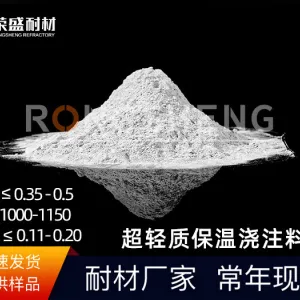
In recent years, the construction and manufacturing industries have seen a growing emphasis on energy-saving and environmentally friendly materials. As global awareness of environmental issues increases, the demand for innovative solutions in material science has escalated. This report investigates the trends in this industry, focusing particularly on the role of ultra-lightweight insulation castables.
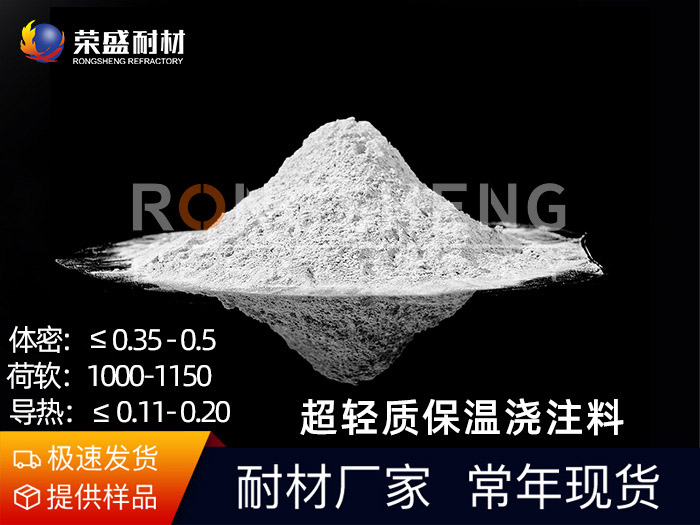
The global market for energy-saving and environmentally friendly materials is projected to grow at a CAGR of 5.7% from 2023 to 2030, driven by stringent regulations, technological advancements, and a shift towards sustainability. Innovations in material formulations, especially in insulation technologies, are central to this growth. Ultra-lightweight insulation castables have emerged as a significant product due to their exceptional thermal performance and lightweight properties, which facilitate easier handling and application in various construction projects.
Ultra-lightweight insulation castables not only reduce energy consumption by providing superior insulation but also contribute to lowering overall construction weights. This is particularly advantageous in renovation projects where structural load limitations are a concern. Furthermore, their application in industries such as aerospace, automotive, and traditional construction sectors underscores their versatility and growing importance.
As we look to the future, the adoption of ultra-lightweight insulation castables is expected to increase. Industry experts predict that their integration within green building initiatives and energy efficient designs will become a standard practice rather than an exception. The incorporation of smart materials and technologies will further enhance their application, making them a critical component of sustainable innovation.
In conclusion, the trends in the energy-saving and environmentally friendly materials sector point towards a promising future, with ultra-lightweight insulation castables at the forefront. Businesses that incorporate these materials into their operations will not only benefit from competitive advantages but will also contribute positively to global sustainability efforts.
.jpg?x-oss-process=image/resize,h_300,m_lfit/format,webp)
 367
|
367
|
 refractory bricks
top manufacturers
high-quality refractories
industrial applications
refractory bricks
top manufacturers
high-quality refractories
industrial applications
 461
|
Gunning mix refractory
spray material comparison
performance analysis
461
|
Gunning mix refractory
spray material comparison
performance analysis
 20
|
High temperature resistant materials
Market analysis
Industry Trends
20
|
High temperature resistant materials
Market analysis
Industry Trends
 337
|
Magnesium dolomite brick
Global Market
Stainless steel production
Alternative Materials
international market
337
|
Magnesium dolomite brick
Global Market
Stainless steel production
Alternative Materials
international market
.jpg?x-oss-process=image/resize,h_300,m_lfit/format,webp) 138
|
Southeast Asia
Mullite Brick
supply chain management
Building Materials
market trend
138
|
Southeast Asia
Mullite Brick
supply chain management
Building Materials
market trend



.jpg?x-oss-process=image/resize,m_fill,h_100,w_100/format,webp)
.jpg?x-oss-process=image/resize,m_fill,h_100,w_100/format,webp)

.jpg?x-oss-process=image/resize,m_fill,h_100,w_100/format,webp)
.jpg?x-oss-process=image/resize,m_fill,h_100,w_100/format,webp)